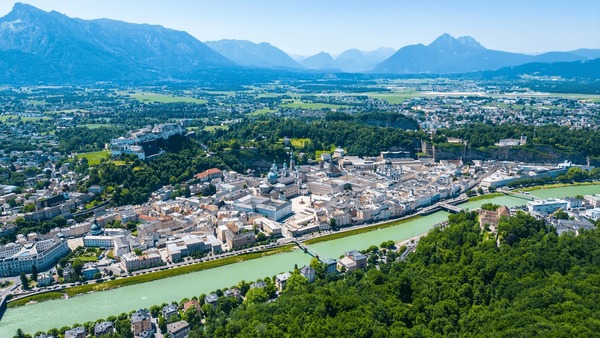
5 Days in Salzburg
on a Budget
Have you got a long weekend on the horizon and don't know how to spend it? I went to Salzburg in late March for an anniversary trip and came back talking about when we could go back. This is what we did, what it cost, and what's actually worth your time.
So, Austria — what's the first thing that comes to your head when I say this destination? I wouldn't call myself a betting man but I'm sure it would be skiing or Vienna. Ever thought about merging the two…
That's Salzburg. A baroque city so perfectly preserved it looks like a stage set — which is appropriate, given that it was essentially the childhood backdrop for The Sound of Music and the birthplace of Mozart. But beyond the tourism, it's genuinely extraordinary: the historic old town on both sides of the Salzach River is UNESCO-listed, the fortress above it is the best-preserved medieval castle in Central Europe, and the surrounding lake district is among Austria's most beautiful landscapes.
It is rare that you visit a place you could genuinely see yourself living and working in, but this was it for me. My girlfriend and I embarked on this trip for an anniversary getaway at the end of March — a time of year you wouldn't particularly be looking at a city like Salzburg, but it was absolutely perfect. We could embrace and see the true city without tour groups clogging every corner. Although it means some attractions aren't open, it is very much worth it.
It is rare that you visit a place you could genuinely see yourself living in. This was it.
Where We Stayed — and why it matters
We stayed in a quiet neighbourhood just north of the centre — a one-bed Airbnb right by the Salzach River for just under £100 a night. Nothing feels better than waking up in a new city, especially one as relaxing as Salzburg. Taking in the crisp March morning on a leisurely walk along the river, the true wonderland of baroque architecture gradually coming into frame. By the end of the trip it felt like a routine we'd had for years.
If you're planning Salzburg: think twice about staying inside the tourist centre. Find somewhere that gives you that walk. It lets you see a more natural side of the everyday flow of the city, and on a budget it makes a genuine difference to what you pay per night.
The Linzergasse neighbourhood on the north bank is typically 20–30% cheaper than Altstadt and is only a 5-minute walk across the bridge. Excellent independent restaurants and a more local feel.
The Day the City Introduced Itself
Our first day was one of those perfect ones you don't plan — you just find yourself in the middle of. Having got up for our flight at half three in the morning, you'd think we'd be shattered. But it's that feeling of being somewhere new that keeps you going; it does a better job than any amount of caffeine would. (Although a coffee upon arrival definitely helped.) The weather was on our side — sunny, fresh, and ideal for our first date with Salzburg.
I'm ashamed to say my first time watching the iconic Sound of Music was a mere few days before flying out — one of the best decisions I have made. As cringy as it sounds, I couldn't help myself from singing along as we took on the Sound of Music walking tour.
I would greatly recommend a free self-guided route over the traditional bus tours — both for the cost, and for the chance to experience the city on foot at your own pace. The better parts of any trip happen when you go off-plan, and that's exactly what this is: it takes you around the key sites with context on what you're looking at and how it appeared in the film.
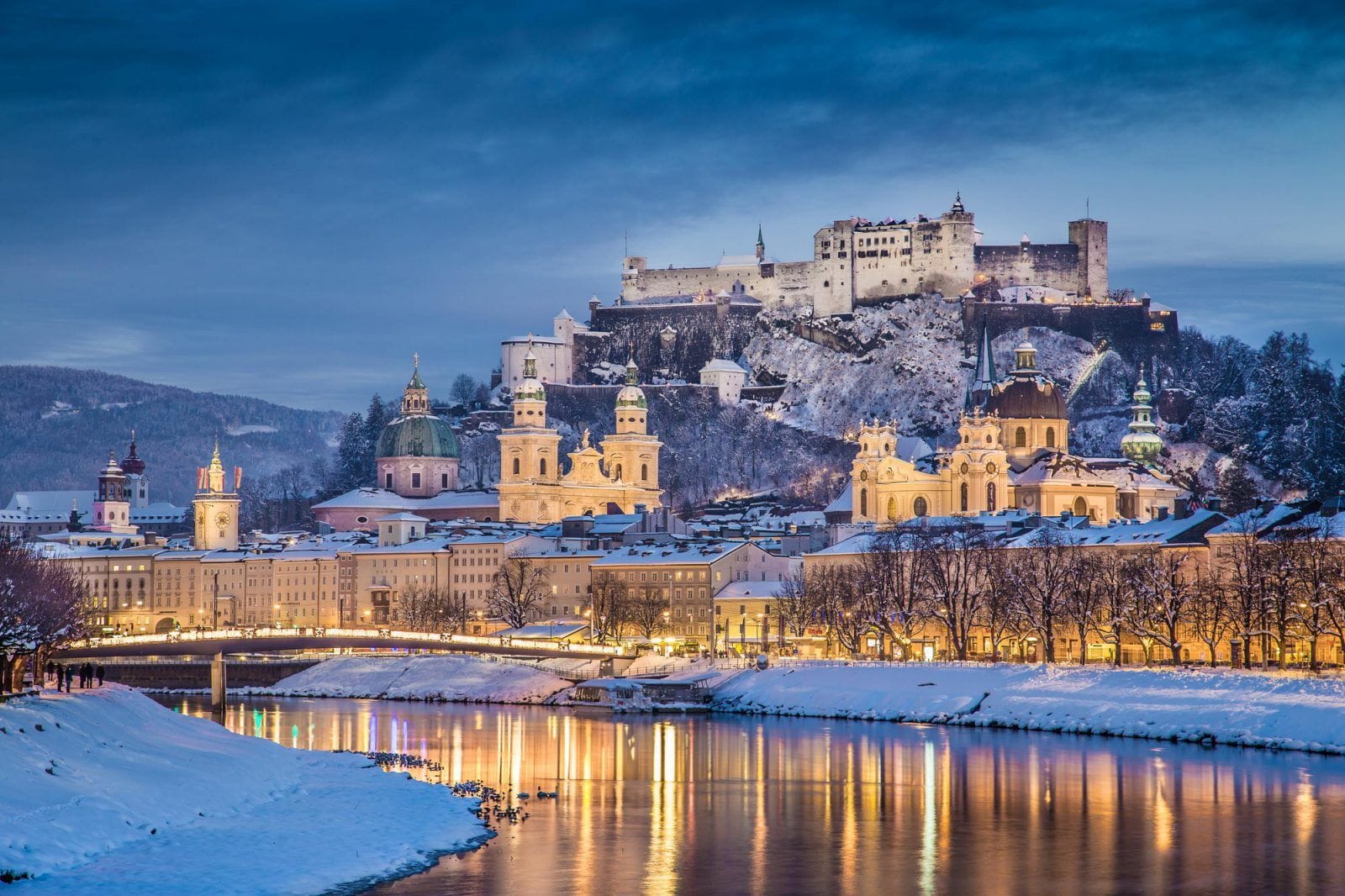
Looking across the Salzach towards the old town — the walk we took every morning.
Having the film fresh in our heads meant that when we walked into Mirabell Palace gardens and found the exact fountain and the exact steps from the Do-Re-Mi sequence, it landed properly. From Mirabellplatz we wound through the old town, past Residenzplatz where Maria famously splashes the fountain mid-song, through St Peter's Cemetery which is beautiful entirely on its own terms, up to Nonnberg Abbey at the foot of the fortress hill. Here was when we got our first view over the city — and wow.
Then out along Hellbrunner Allee in the afternoon — a long, straight, tree-lined avenue that leads south toward Hellbrunn Palace, where the pavilion from the film is located. The whole thing is free, takes half a day at a relaxed pace, and doubles as one of the best ways to learn the geography of the city on your first day.
A well put-together free walking guide that covers all the key filming locations with photos and context. Much better than a bus tour — you set the pace and can stop for coffee whenever you want.
Hallstatt — Do This One
I'll save the full story of Hallstatt for its own post — because it deserves one. But the short version is this: we took a train through mountain scenery that had our faces pressed against the glass, crossed the alpine lake by ferry, and watched one of the most beautiful towns in Europe gradually materialise from the water.
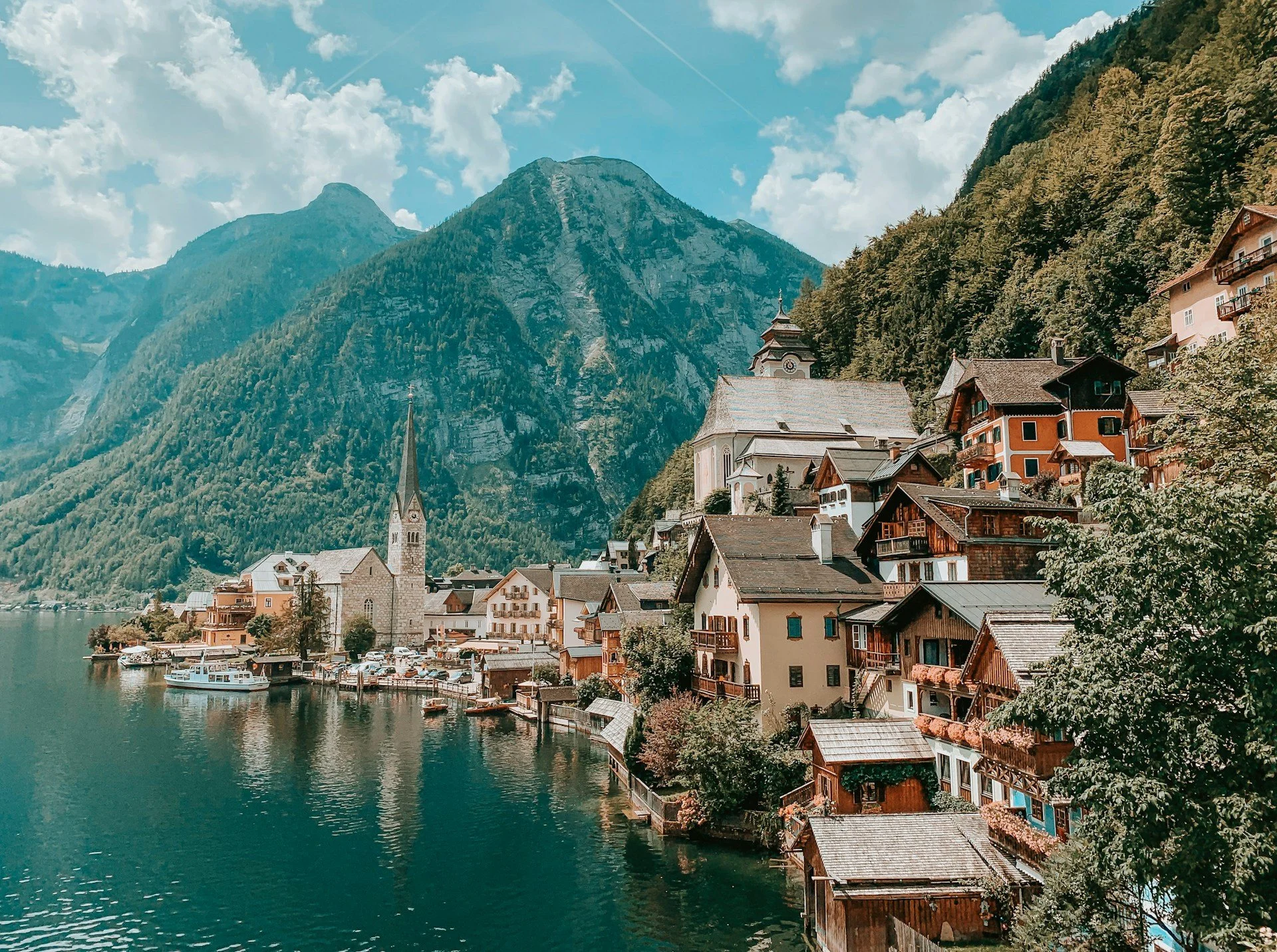
Hallstatt from the ferry — it genuinely looks like this.
If you're going to do one day trip from Salzburg, this is it.
The Salzburg Card Day
Normally I'm not one to purchase the tourist trap that a city card is. This time I was pleasantly surprised. On top of the free transport it provides, this pass was a simple itinerary stacker — covering all the best indoor activities in Salzburg for a fraction of the price. Especially useful in our case: we kept one day deliberately loose, knowing we'd get bad weather at some point in March.
So, is the Salzburg Card worth buying? Quick answer: yes, as long as you use it right.
The Fortress, Mozart, & a Slight Detour
The fortress in the morning — and if you're visiting Salzburg, this isn't optional. The funicular from Festungsgasse takes barely 90 seconds and deposits you at the top with no ceremony, no warning. You step out and suddenly the entire city is laid out below you — the Salzach cutting through the middle, the old town on the south bank, the Mönchsberg cliff to the west, and the Alps closing in on every side. It takes a second to register.
Hohensalzburg is the best-preserved medieval castle in Central Europe — which sounds like a line from a brochure until you're standing inside it. The scale of it, and the fact that it has genuinely been up there since 1077, makes the rest of the city feel suddenly contextual. You understand why Salzburg is what it is.
The fortress gets busy by 10am. Up before 9 and you'll have the battlements largely to yourself — the views over the city in the morning light are noticeably better for it.
We did both Mozart sites — his birthplace on Getreidegasse and his residence nearby — and we'll be honest: neither of us could hum more than two bars. What surprised us was how genuinely interesting the historical context is regardless. The story of the Prince-Archbishops and how Mozart's career played out in this particular city is worth knowing. You don't need to be a devotee to find it worthwhile.
The afternoon was slower. Coffee, a bagel, a wander. And then — full transparency — we went to the Red Bull Arena. Most Salzburg guides won't tell you to do this. I'm not sure I'm telling you to do it either. But we were there on a Friday evening, there was a shopping centre next to it, and we ended up staying longer than expected.
Sushi in the evening — better than you'd expect in a landlocked Austrian city — and a late Friday night walk through the old town that was quieter than anticipated. We found tiramisu to take home. A good day.
Gaisberg — Do This Last, Always
The best part of the trip. And I'd say that even against Hallstatt.
We took the bus up to Gaisberg — the mountain that sits above and behind the city — and hiked a circular route that climbs through pine forest, opens up to wide viewpoints as you gain height, and eventually reaches a snow-covered summit with uninterrupted views in every direction. The path winds up steadily through the treeline for the first hour; you don't realise quite how much altitude you're gaining until the trees thin and suddenly you're above everything, the whole Salzach valley opening out below you. In late March the top is properly snow-covered — crampons aren't necessary on the main path but you feel the difference in the air.
At the summit there's a small restaurant. We had a beer. The Alps went on in every direction. Salzburg was in the valley below us — small, tidy, baroque, entirely itself.
The fortress has been there. The mountains have always been there. You sit at a simple cafe table with a beer and that's the whole thing, really.
There's a bus from the top back down to the Hauptbahnhof. We caught it, made our flight, and went home. That detail matters: you can do Gaisberg on your last morning without a car, without stress, and go straight to the airport after. Plan it that way.
Takes you up to the Gaisbergspitze car park. Check the return times before you go up — the buses don't run constantly. Late March means the summit path can be icy; proper walking shoes are not optional.
Quick Facts & Costs
| Flights | Salzburg Airport (SZG) has direct routes from London (Ryanair, easyJet). Budget £60–120 return if you book 6–8 weeks out. Munich (MUC) is 90 minutes by train and often cheaper. |
| Accommodation | Our Airbnb on the north bank averaged just under £100/night for a one-bed. Hostels start around £25–35/dorm. Hotel options in Altstadt run £120–200+ for mid-range. |
| Salzburg Card | 48-hour card costs €40 (2025 prices). Covers all public transport plus entry to most museums and the fortress funicular. Pays for itself easily if you use it for 3–4 attractions. |
| Eating out | Local cafes and Gasthäuser around £10–16 for a main. Sausage stands in the old town are genuinely good and around £4–6. Budget around £25–35/person/day for food and drink. |
| Hallstatt | Return train from Salzburg Hauptbahnhof is around £25–30. Add the ferry crossing at the other end (essential — £5–6 return). Full day trip budget: £35–40 all in. |
| Gaisberg | Bus 151 costs whatever your Salzburg transport day pass covers — effectively free with the Salzburg Card. The hike itself costs nothing. Budget only for the beer at the top. |
| Overall | We did 5 days including flights, accommodation, Hallstatt and the Salzburg Card for well under £800 for two people. Salzburg rewards travelling outside peak season. |
Salzburg is the rare city that doesn't need to perform. The fortress has been there since the 11th century. The mountains have always been there. You sit at a simple cafe table with a beer — and that's the whole thing, really. The mountains behind the rooftops. The fortress above everything. The city just getting on with it.
We went for an anniversary trip on a budget in a month most people skip. We came home talking about when we could go back.
— Blake, Salzburg, March 2025